

Did Ndis Rules Change? What’s Covered for Daily Personal Activities in Sydney Right Now
If you feel like the NDIS rules are changing faster than you can keep up, you are not alone. The official transition periods have ended, and the NDIA now enforces updated definitions more strictly. Because of this, many families across New South Wales are asking one important question: Will my daily personal care claims still be approved?
Many participants worry about compliance. After all, no one wants the stress of a rejected claim or confusion with their plan funding.
Fortunately, core personal care support remains funded and widely available. However, you need to understand how the new guidelines classify your supports. Once you know the rules, you can manage your funding with greater confidence.
The Reality of the New NDIS Guidelines
The latest NDIS updates focus on clarity and stronger alignment with the official “Allowed” and “Banned” support categories. In addition, the NDIA now checks billing items more carefully to ensure every claim directly relates to a participant’s functional impairment.
For families in Sydney, flexible interpretations are no longer accepted. Even so, these changes are not designed to remove essential supports. Instead, they help protect participant funding by ensuring providers document services correctly from the beginning.
What Counts as Assistance With Daily Personal Activities in Sydney?
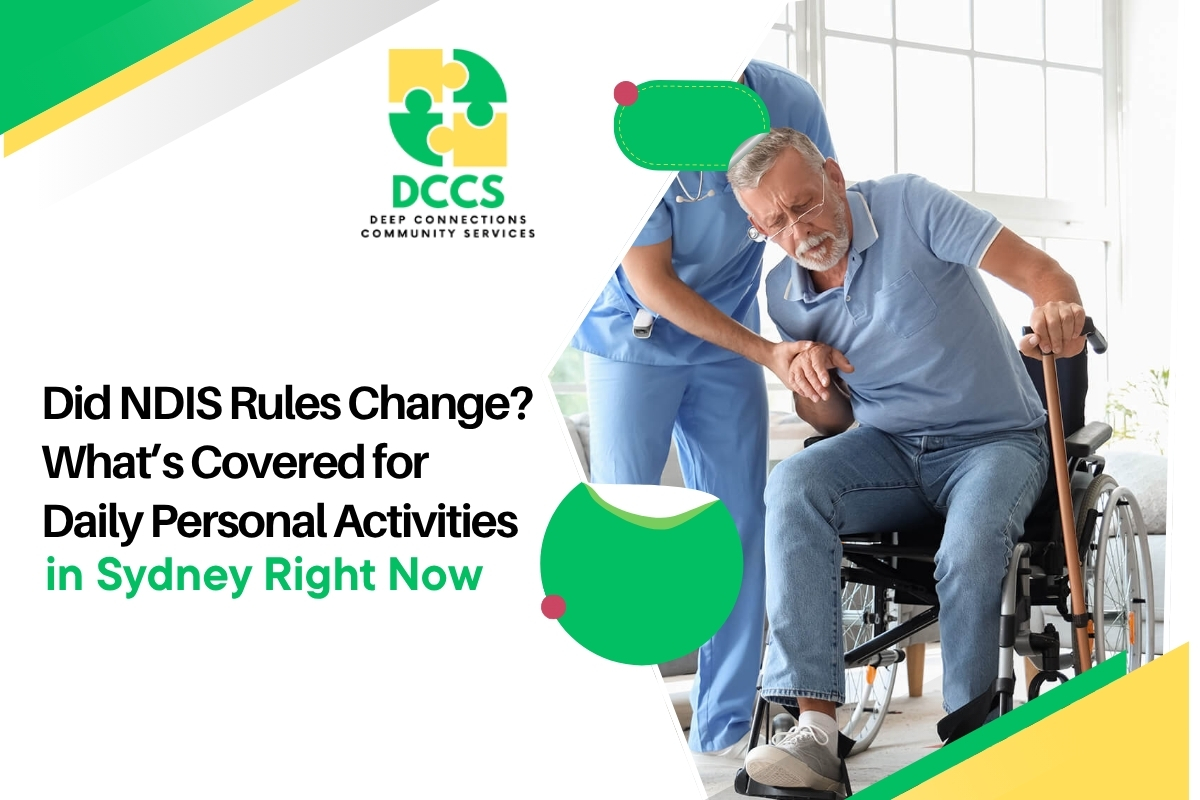
The NDIA classifies daily personal activities as regular, hands-on supports that participants need because of their disability.
If you require assistance with daily personal activities in Sydney, approved supports usually include:
- Personal hygiene support, including showering, bathing, dressing, and oral care.
- Morning and evening routines, such as getting in and out of bed safely.
- Mealtime assistance, including support with eating, drinking, or feeding needs.
- Mobility assistance around the home, including transfer or hoist support.
- Toileting and continence care provided respectfully and safely.
Most importantly, these supports must directly relate to disability-specific needs rather than ordinary daily responsibilities.
Understanding the Difference Between Personal Care and Daily Life Tasks
Many participants become confused when separating personal care from household assistance. Therefore, understanding the difference can help you avoid billing problems and claim rejections.
NDIS Personal Activities Sydney (Core Supports)
These supports focus on personal physical care and immediate well-being. They include hands-on assistance that cannot be delayed, such as grooming, hygiene, and skin care.
Assistance With Daily Life Tasks Sydney (Core or Capacity Building Supports)
These supports focus on improving independence and managing the home environment. They may include:
- Light cleaning in personal spaces.
- Meal preparation and cooking guidance.
- Help with budgeting, paperwork, and planning routines.
By clearly separating these support categories, you can reduce the risk of NDIA compliance issues.
How to Keep Your Billing and Claims Compliant
You can protect your NDIS funding by following a few simple steps.
Review Your Service Agreements
First, make sure your agreements use updated NDIS terminology and approved support descriptions.
Maintain Accurate Support Worker Notes
Next, ensure support workers record detailed shift notes that explain the exact supports delivered during each visit.
Speak Regularly With Your Plan Manager
Finally, stay in contact with your Plan Manager to confirm invoices match the correct NDIA billing categories.
Finding the Right Support Worker With Deep Connections Community Services
You should not need to become an NDIS compliance expert just to receive quality care. Thankfully, experienced providers can guide you through the updated requirements while delivering reliable support.
At Deep Connections Community Services, we provide tailored NDIS personal activities in Sydney. Our trained support workers understand the latest NDIS guidelines and follow compliant billing practices, giving families greater peace of mind.
Get in Touch With Our Sydney Team Today
Website: deepconnectionscommunityservices.com.au
Phone: 0415 837 734
Email: info@deepconnectionscommunityservices.com.au
Address: 5 Cardigan Road, Greenacre NSW 2190
Office Hours: 08:00 AM – 08:00 PM
Frequently Asked Questions (FAQ)
1. What is the difference between personal care and daily life tasks under the new NDIS guidelines?
Personal care includes direct hands-on support such as showering, dressing, and hygiene assistance. In contrast, daily life tasks focus on household management and independent living skills, including meal preparation and light cleaning.
2. Can NDIS funding for daily personal activities cover household cleaning?
No. General household cleaning cannot be claimed under daily personal activities. Instead, providers must bill cleaning services under the appropriate household support category.
3. How do the updated compliance rules affect service agreements in Sydney?
The NDIA now requires providers to use clear and specific support descriptions. Therefore, outdated or vague agreements may increase the risk of claim rejections.
4. What should I do if the NDIA rejects a personal care claim?
Start by checking the rejection reason with your Plan Manager. Sometimes, incorrect billing codes cause the issue. If compliance concerns remain, gather evidence showing the support directly related to disability-specific needs.
5. Will these changes reduce my funding?
No. Essential support funding is still available. However, the NDIA now applies stricter compliance checks to ensure all claims match approved support categories.